

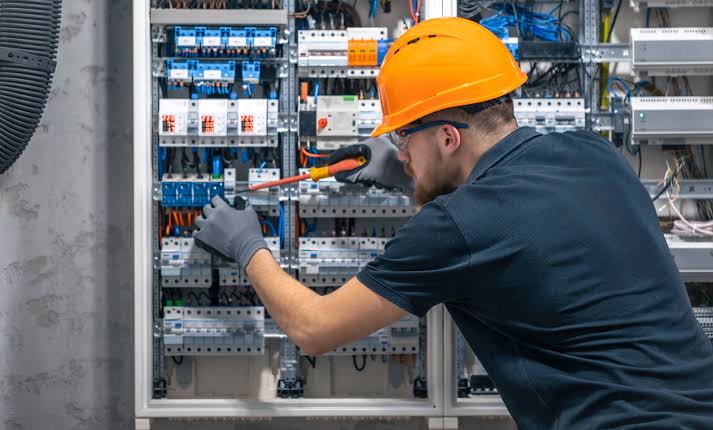
These common electrical warning signs indicate that your home may be in danger, and why electrical maintenance is important, from flickering lights to antiquated panels.
Buying a house can be a whack-a-mole game. After mowing the lawn or fixing a leak you’re being asked to do something else. Electrical maintenance is the most important. A leaky faucet is a nuisance, but a broken wire is a hazard. It’s easy to dismiss the soothing sounds of our appliances, such as the lights and refrigerator, until they fail. Monitor your safe haven to make sure that it is not a fire hazard.
Flickering or Dimming Lights
While sitting on the couch, reading a book, the lamp next to you starts acting like it’s at some kind of ’90s-rage. This is the time to think that maybe it is simply a loose bulb. At times, it’s just that. If the flashing persists, then you may have a more serious electrical problem.
Air conditioners are energy hogs and so are treadmills. Overloaded circuit causes flickering lights when you turn on your refrigerator.
The old and worn-out wiring is put under a hefty strain by the modern technology. Of course, if it flickers on and off for a prolonged period of time, it may also be a sign of a loose neutral connection, which is a bit more serious and requires a specialist to find.
Tripped Circuit Breakers
Consider your circuit breaker to be a somewhat grumpy but essential bodyguard. It is its sole responsibility to close off things before they become hazardous. You plug in too many hair dryers and once in a blue moon, your breaker trips! If you have to go to the garage or basement twice a week to turn on the switch, however, you have a problem.
One of the more common electrical maintenance problems is frequent tripping. Basically, it means that the circuit is being overloaded. But beware it may be a short or ground fault! If the breaker snaps back on, do not switch it back off! Your system is telling you that there is a dangerous electrical detour in your system and it needs to be fixed.
The Issue of Outlets or Switches
There is that one “magic” outlet that requires the plug to be twisted a bit to the left, but not too much—just a little bit. These oddities we’re accustomed to living with, but if there’s a problem with the outlets, it’s often a recipe for a melted faceplate or worse. Any outlet that is warm to the touch or appears discolored, sometimes even charred, is no longer ready to use. Tape it over and do not use until it is replaced.
Thermal resistance is caused by gaps within the wall assembly; gaps equal heat. Many electrical outlet issues come from back-stabbed wiring, in which wires are pushed into holes instead of properly secured. This is a common problem that is more likely to occur after decades of use. Your switches’ internal mechanism is probably malfunctioning if they click or pop when you flick them.
The Following Products are for Use on Exposed or Damaged Wiring
If your home is of some vintage, its wiring may resemble a world of museum exhibits rather than utility. Worse still, if you have a crawlspace or attic, the rodents in the area could have snacked on your insulation. Chewed wires are a bad dream come true, primarily because they don’t show up until they begin to spark.
Ensure coverings are not easily damaged or torn. A silver wire is most likely made of doubtful aluminum, a product of the ‘60s and ‘70s. Al, in contrast to copper, is always changing in size, which can lead to connections coming loose and even flames. Regardless of how much of a pain in the ass they are, they have to be replaced or connected correctly for your own calm.
The Smoke From the Burn can Cause Burning Smells or Sparks
This is the “red alert” of home maintenance. Do not pass go if the odor is similar to burning plastic or an odor with a strong ozone-like smell. Electrical fires have a strong, acrid smell.
Just power jumping a gap but if there’s a bright blue flash or a loud pop, something is amiss.
Power Surges or Equipment Failures
Most often, the surges are caused by surges inside the home, but at times, they may be caused by storms or lightning. Your lines have minor spikes when big appliances are switched on or off. Over a period of time, these tiny spikes damage the fragile electronics of your televisions and computers.
You’re probably experiencing internal surges if your devices are dying too soon or if your microwave clock keeps restarting. It’s one of those things in a house that people don’t notice unless there are sudden events that are happening. The surge protector is just a bandaid solution, as the solution typically means examining the dedicated circuits for the heavy power users.
Outdated Electrical Panels
The heart of your home’s power is the service panel. You’re decades behind when you open that metal door and see colored glass fuses instead of flick switches. But fuse is not evil; it’s not that they don’t want everyone to have a laptop, a gaming console, and a phone.
Old brands are known for not tripping when it’s needed, which is essentially like having a bodyguard who falls asleep at his post. Upgrading to a new panel is a very substantial project, but it’s the basis for a secure home. If you’re not certain about the condition of your system, you can give yourself a clear view of what needs to change to bring your home into the 21st century by calling in a professional team such as the Fuse Service team.
Conclusion
A lack of maintenance on your electrical system can cause a very expensive and troublesome problem. Your house is calling for assistance with flickering lights, odd smells and heat. By being able to watch for these problems, you will not encounter any unsuspecting repairs.